Category Archives: Uncategorized

Real or Perceived? Risk! And what the Zoom to do about it.

Real or Perceived? Risk! And what the Zoom to do about it.

Sometimes it takes a threat, like the current pandemic, to get people to learn new technology. If you have been one of those people who avoid turning on your camera for video calls or won’t add a new app to your phone, it’s time to embrace digital communications.

Digital communication skills are important because when some parts of communication are absent, notably body language or tone of voice, our perception of the communication will likely err on the negative side.

How can we overcome this barrier? Practice.

My favorite tool is Zoom video meetings, which has a robust free version, and MyFreeConferenceCall.com has free calls and video meetings, too.

Easy Tips to Look Good on Video

Being on video can be awkward at first. It’s one thing to Facetime with your family member and another to present well in a business meeting on Zoom. I use video in all sorts of ways, but I don’t have to spend a lot of time to look good. Following are some tips to keep your cool on video:

  • Camera. Elevate (or lower) the camera on your laptop or desktop so that it is eye level. On laptops the tendency is to be looking down at the camera. Not the most flattering for most of us (ask any self-respecting, selfie-taking teenage girl!).
  • Mobile Phone. If you have to use your phone for video, find a good place to rest at eye level. Otherwise your arm will get tired! I have an inexpensive tripod, but I’ve used shelves, piled up books, and other contrivances.
  • Lighting. A light straight above your head will make you look ghostly or creepy. Save that for Halloween! Too much light in your face and you will be washed out. Light directly behind you, such as a window, will turn you into a silhouette. Ideally, light should come a little off center from you. In Florida I have so much natural light that I have to tilt the blinds. Tweak until you get it right.
  • Background. Bare walls look like you’re in prison. I have this issue when I travel! If possible, have wood paneling or something in the background. Okay, maybe not a plant sticking out of your head… Test with your camera ahead of time to see how your room will appear.
  • Makeup. If you’re someone who wears makeup routinely, just do your usual. I don’t usually wear make-up, but on camera my rosacea makes me look like I have a sunburn! So, I use foundation to even out my color. And it never hurts to put a spot of color on your lips, even if it’s just lip gloss.
  • Clothes. I live in Florida and wear a lot of sundresses and it has taught me to always have a collared shirt or jacket close by! Why? Because bare shoulders are even less appropriate on video, especially when shoulders up is all the camera catches. Wear a proper suit jacket if you would in a face to face, but if it’s business casual, a collared shirt or a blouse with a higher neckline works very well.
  • Your Gaze. When you are in a group meeting, the gaze is less important, but the fewer the people, the more you want to appear as though you are looking at the person, not down or over. I like to position the “box” of the person right under the camera on my laptop. That’s natural. But if that’s not possible and I want to have “eye contact” I gaze at my camera. It feels weird but it works.
  • Emergency Out. If you worry about the kids (streaking) running behind you on video, or the neighbor cursing out the window, just be sure you know how to hit the mute and video toggle buttons so you can do it quickly! This also works well for coughing and eating.

Low-Pressure Practice Opportunities

Advice will only take you so far. Low-pressure practice opportunities are great, too.

Don’t Forget to Be Forgiving

As we experience a surge in people communicating through digital channels, there are bound to be some mistakes – and sometimes they will be yours. Don’t forget to forgive yourself and others when mistakes and misunderstandings happen.

As you stress out over virtual communications, or not, here’s one of my all-time favorite funny videos to help you bust a laugh!

More Resources

Net Worth vs. Capacity: What’s the Difference and Why Should You Care?

Net Worth vs. Capacity: What’s the Difference and Why Should You Care?

For those of you out there still trying to avoid using the words “net worth,” I’m here to tell you that the war is over – and you lost. There might still be skirmishes left unresolved in out-of-the-way places, but with the entrance to the sector of heavily-funded start-up companies like Windfall, there is no avoiding net worth.

Not only are people using net worth – with success, real or perceived – but Windfall pushes the envelope claiming to offer “precise net worth data, not a score or a range,” which we all know is not possible. I find it difficult to believe that all of the individuals in their database have opened up their private finances to the company to calculate assets minus liabilities.

But it’s great marketing. And that means there is a pain point that is not being relieved by capacity ratings.

Capacity Ratings

Capacity, and more specifically, major gift capacity, saturated the market in tandem with electronic wealth screenings. Typically, it is based on a percentage of found or visible assets and multiplied by 5, representing a 5-year pledge, which was standard at the time. Over time companies have added more nuance to their proprietary scores.

When wealth screenings first emerged, this information felt like manna from heaven! Suddenly hundreds of thousands of records could be rated in the blink of an eye. And then those segments could be evaluated and assigned to development officers. Major gifts became a …movement!

But fundraising professionals, not least the prospect researchers among them, sniffed out the discrepancies and imperfections in the automated capacity rating approach. The screening companies responded with algorithms of increasing accuracy, but between the marketing language that over-promised, the limitations of visible assets, and the increasing efficiencies in major gift programs, consumer pain continues to emerge.

Is that consumer pain assuaged with a net worth number, such as provided by Windfall?

The Prospect That Didn’t Rate

I recently had a client asking for “just a capacity rating” on a few prospects, and super quick before her meeting with the CEO. All you researchers out there know how fraught with peril that request was! But I understood the pressure she was under and I really wanted to help.

And yet, the electronic wealth screening capacity rating was low and this prospect had occupation suggesting there was more. Without time to research I was without a good response, beyond “I think there’s more.”

We agreed that deeper research was what would help this CEO who was keen to know Net Worth – forget about capacity rating. And sure enough, deeper research revealed that the husband had serious monetary potential that was difficult to untangle, let alone value. (Tell me again how Delaware can get away with making it super difficult to identify officers and members of companies?)

But we fit the couple into a wealth tier based on visible assets, an asset allocation model derived from Capgemini data, and, well, our subjective assessment.

Wait for it… Here Comes the Backlash

So, what does Windfall have that I haven’t got? Data! Algorithms! More Data!

I’ve been talking to a few data companies who are looking to fill in gaps in the nonprofit fundraising market. Based on those conversations, the likelihood of a “scandal” involving nonprofits and data feels like an inevitability.

It’s not that it’s “wrong” to use all kinds of new and old data in new ways, but it’s a tough sell to get an organization’s leadership on board with communicating that usage to donors and the public. Policies are dull and boring and no-one cares – until they do. Ask any fundraiser in the U.K., especially at organizations that have been fined for violating GDPR.

As if that’s not a big enough hurdle, the data sources being used by these companies is not known. It’s not that companies are being secretive necessarily, but unlike the traditional wealth screening products, we have not been demanding full disclosure.

I remember the news headline fallout from the early wealth screening days. This new use of data smells like trouble all over again.

Caring is Sharing

Similar to the early days in wealth screenings, using data in new ways isn’t “right” or “wrong,” but it does need to be evaluated and communicated.

Opening up discussion, writing opinion pieces, presenting, and otherwise sharing your experience and knowledge with others, especially through global forums provided by associations like Apra and AFP, is worth the effort and will benefit you and your organization.

Estimating net worth isn’t the bogey man. Lax data policies and poor communication are the openings for trouble!


Additional Resources You Might Like

Somatics, Habits, and Research

Image by Free-Photos from Pixabay

I’ve been publishing a blog post every month since 2008–that’s a twelve-year habit. And, of course, I’ve had some months where I skipped my blog post, but for the most part I’ve been very consistent. How do I do that?

I was asking myself this question today because I “wasted” two hours groping around online and in my offline library looking for something I could write about today. Some months the ideas pour out of me and the whole process takes an hour. Presto! Not today. Finally, I thought about the various things I had been learning lately and how they relate to each other–and research.

Somatic Learning

I belong to the Association for Talent Development in Tampa, Florida. I wanted to learn more about creating workplace trainings and the group has taught me some great stuff. The last session was about somatic learning. I won’t profess to fully understand it, but essentially it is using an awareness of how your body feels (not emotions, but things like sweating, rapid heartbeat, queasy, etc.) as well as movement to aid in learning.

Somatic learning is intent on providing the learner with the opportunity for internal change.

For example, you can learn a lot of things about public speaking, but how do you learn to stop being terrified of it? That requires internal change.

And internal change can be really difficult to make happen!

The presenter in the somatic learning session asked an audience member to volunteer. The new habit the volunteer wanted to form was to become a confident presenter. She had received a promotion at work that now put her in front of the room as a trainer ands she was VERY UNCOMFORTABLE.

Much like the contested TED Talk by Amy Cuddy on body language, where she suggests that assuming a power pose will engender confidence where it was previously lacking, the volunteer from the audience went through an exercise where she physically moved and became aware of the good and bad feelings in her body. She walked back to her seat in a surprisingly much more confident manner!

Habits

Will that audience volunteer now have a solid new habit of confidently presenting? I suspect it will take a bit more repetition before the new habit solidifies, but she is primed for it. She has learned to connect what her body feels like when she is confidently in front of a group and can reconnect with those feelings with practice.

Today I probably could have cut my two-hour “what do I write” angst time in half if I had remembered habits I had formed in my previous home on the beach. When my initial survey of the information world would fail to yield a topic idea, I used to go for a walk on the beach. I knew the route and it was very effective. I’m in a new neighborhood now, but could have easily adapted the tactic.

The act of walking in nature–be it a beach or a park–gives my mind the space to untangle problems and ideas. It doesn’t work every single time, but it works so often, and is exhilarating when it works, that I’m keen to repeat the effort!

It’s probably because I started my blog with a love of writing firmly in place that the monthly blog habit was easier to keep. Writing makes me feel so good, I don’t even worry too much about whether anyone reads it! So, when I struggle like I did today, I can reconnect with all those good feelings and persist.

Prospect Research and Fundraising

So, what does all this have to with prospect research and fundraising?

Today I interviewed one of the Prospect Research Institute members, Bryan Campbell, for my #ChatBytes podcast (it will publish in Feb 2020). In the interview Bryan recommends a book, Five Minutes for Fundraising, by Martin Leifeld. Bryan shared how important it was for him to understand how a frontline fundraiser performs so that he could improve his own work.

Some organizations have taken it a step further and encourage researchers to attend a donor visit now and again. Imagine how your body would feel if you were at a visit where a donor was being asked to make a gift. Would you feel sweaty with your heart racing as you heard the development officer leading up to the ask?

As the donor started getting excited about the gift opportunity and talked about discussing it with her accountant, how would you feel? Would your heart calm down? Would your stomach muscles relax? Would your whole body feel lighter?

Whether you have the opportunity to tag along on donor visit or not, or if you are the development officer preparing for the visit, you can learn from your body.

Early in my career as a consultant, before I delivered a profile, I would imagine myself getting ready to go to lunch with that donor prospect. My stomach would fill with butterflies and my mouth would dry up a little and then, often, my head would begin to fill with new questions. Suddenly my profile looked different and I usually double-checked something or added another detail.

The prospect research field now encompasses so much more than behind-the-scenes work such as prospect profiles. And for many of us, this can cause a lot of anxiety. Every single day we face changing software programs, changing websites, and so much more.

Maybe you even face the opportunity of a promotion to a leadership position!

Tuning into how your body feels and imagining how it could feel in a new situation can be a powerful tool to create internal change. Somatic learning could take you from feeling insecure about leading a meeting to becoming a confident leader.

If you like this idea or are curious to learn more, I’ve included some resources below.

Additional Resources

Can You Raise Millions Without Prospect Research?

Image by pasja1000 from Pixabay

“You’ve been raising MILLIONS with no prospect research and no prospect management?” I’ve asked this question incredulously in my head many times during my consulting career. As 2019 draws to a close and I have been reflecting over the work we’ve done at Aspire Research Group, I had an “aha!” moment. I finally have a real understanding about why and how some organizations are so successful at raising money, even when there is no prospect research.

It’s the Relationships

I know, it sounds lame. We hear it all the time. People give to people. Donors have to trust you before they give. And maybe it is no coincidence that some of the most successful organizations Aspire serves are religious-based. Their religious leadership excels at creating deep, loyal, and long-lasting relationships.

One client has a team of development officers scattered around the country, each responsible for major gift fundraising. When the new vice president joined the team, among other things, he introduced some moves management practices and he purchased wealth screening services. Who needs a prospect research professional with all of those millions going on?

But this vice president knew he would have to raise significantly more and do it efficiently, to fund the president’s new vision. Wealth screenings are great, but they only provide very raw data. He needed his best prospects prioritized and he and his team needed to confirm information about them as they entered into a unique short-term giving opportunity.

In other words, the team needed to break through to the next level of major giving at their organization.

Identify and Prioritize | Engage and Ask

There are two categories of activities that most often awaken fundraising leadership to prospect research. First, they need to identify and prioritize prospects. A new and pressing vision or opportunity pushes leadership to dig deeper. There is a desire to identify all good prospects and to prioritize them as best prospects, not just wealthy prospects. Best prospects are ones that can be reached, are likely to give, and can give big.

Second, once there is confidence in the prospect pipeline, the next task is to engage and ask for a gift. Once a client has witnessed the power of research, the discussion is not usually “should we?” Instead it is usually along the lines of “how much information do we need and when?”

Internal and External Relationships

But research alone is never enough to break through to a new level of giving. And that’s why I love working with leaders. A leader hires great people and trusts them to do good work. And when an organization demonstrates great relationship-building with donors, it often follows that the organization has a relationship-building culture embodied in and modeled by its leaders.

It was when I was reviewing and reflecting over our list of active clients that the “aha!” hit me. When there is a culture of relationship-building internally, this is likely to spill over externally to donors – and consultants – too. And this means two things for Aspire: (1) The vice president or director of development is not going to have to fight to get research because leadership is likely to hire people they trust to make those decisions; and (2) using research such as wealth screenings, prospect management, and prospect profiles is going to be much more successful because development officers already know how to build great relationships.

And sure enough, when reviewing our client list, those indicators are there:

  • A longer sales process involving more up-front meetings to talk about needs and services, but a quick turnaround on signing the agreement and starting the work. The development officer is trusted to make a good decision and in turn, is concerned about what kind of relationship s/he can have with us.
  • The development director brings the executive director or vice president on a review call and I hear the supervisor saying things to the development director like: “it’s up to you to decide” or “that’s why I hired you, because you’re the expert.”
  • We screen the active donor base for wealth and a high percentage of donors are highly rated for wealth and philanthropy. When listening to the conversation as the team recognizes some of the top names, it is the same story of relationship-building over and over again as they recount how donors were engaged by leadership.

These smaller development offices with maybe one or a handful of staff have tremendous fundraising opportunities. How? Because they and the organizations they serve build strong relationships.

Aha! It really is about Relationships!

I wanted to share my “aha!” moment because a shift in perspective opens the door for innovation.
Consider the following statements:

  • Yes, you can raise millions and millions of dollars in gifts without prospect research. On the flipside, data and information increase in value if an organization excels at relationship-building.
  • Yes, you can break through to new and higher levels of giving with prospect research. On the flipside, information and data cannot solve a lack of relationship-building skills.

Relationship-building is not something you can read about and then excel at. It is a skill that requires practice. In this month of reflection as we await the New Year, how well are you and your organization doing at relationship-building–internally and externally?

Additional Resources

Every human being needs to learn and practice how to build relationships. I picked these two resources because they are easy to read and adopt and they complement each other. Enjoy!

Should You Clean Up That Mess? The Evolution of Prospect Management.

Should You Clean Up That Mess? The Evolution of Prospect Management.
Image by klimkin from Pixabay

Many years ago, a small, local organization wanted to identify major and planned gift prospects and put in place a plan to raise more money. It was my first ever prospect management assignment as a consultant and I was so excited. I knew exactly how all the pieces worked together and could craft a plan and create a program manual and everything!

I won’t say the assignment was a failure, but if I did it over today I sure would do it a lot differently!

Although I jumped into the project with very detailed intentions, the end result was not the dotted “i”s and crossed “t”s approach that I had been aiming for. Great new prospects were identified and there was forward movement in building relationships, but it wasn’t as neatly organized as I originally envisioned.

First Mistake: Identification and What is a Major Gift Anyway?

The first error I made was assuming that the organization’s goal was to ask prospects to make pledges that would push the prospect to the edges of his or her gift capacity. Instead, the major gift leaned in to match the major gift opportunity, which in this case was an annual gift of $10,000 or more.

If I had taken the time to explore with them what the gift opportunities were, this would have been obvious!

As a prospect research professional, I had been trained to assume a pledge gift over a number of years, but also to create the gift capacity rating based on that full wealth potential.

What might have happened had I provided them with a target ask amount based on giving history and gift opportunity and omitted the gift capacity entirely?

It feels like I might get struck by prospect research lightning just thinking that, let alone expressing it in public!

But no prudent philanthropist is going to make a gift that would dwarf an organization’s budget, so who cares if that philanthropist is capable of making a HUGE gift? Far better to guide the development officer on what is a reasonable ask amount based on capacity, but tempered by giving history to the organization and available gift opportunities.

It makes me wish I had asked a question along the lines of this:

“If you knew I had given a million dollars to my alma mater last year and a thousand dollars to you last year, and you were meeting with me to ask for a gift, how much would you ask for and for what project or program?”

I would have understood so much more about them and the organization by working through their answer.

Second Mistake: Treating People Like They are Textbooks

The second error I made was trying to create a fully structured prospect management program out of the gate. If I had been writing a textbook on prospect management I might start with a discussion on policy and process, but that is not how human beings start to implement prospect management.

Relationships are messy. They are not carefully organized in neat rows in an Excel spreadsheet.

Instead of trying to start with a full and complete prospect management program I might have offered them some proven major gift start-up tactics:

  • Contact Reports: As Jessica Balsam said in the Research Rocks! Podcast (see link below), a great beginning is to start documenting donor prospect visits and other contacts in the database. How simple and powerful is that? Many organizations have yet to take this first critical step.
  • Database Procedures: And in the case of my first prospect management assignment, entering contact reports and proposals required some database massaging. It was well worth spending more effort on database procedures.
  • Top Prospect List: Another common tactic is to focus on the “Top #, Next #”. In practice that means something along the lines of who are my Top 10 prospects and my Next 20 prospects? Those are manageable prospect numbers a development officer wearing many hats can stay focused on. They are also the prospect names the organization’s leadership can stay focused on.

Third Mistake: Being Too Technical!

As a prospect researcher professional, I lean towards creating a logical system that uses lots of formulas and numbers. But relationships don’t work like that. Especially when you are a development officer trying to run the entire development program, not just a major gifts initiative!

In his book, Flawless Consulting, Peter Block talks about identifying and focusing on a client’s strengths. Looking back all those years I have to wonder if I could have inquired about what was working the best in their fundraising program so far. I might have been able to help them use that success to more easily bridge into their budding major gift efforts.

Making the Most of the Mess

If you are looking to leverage prospect research to help raise more funds through major gifts, I hope you might learn from my early mistakes. Structure and method are wonderful things to bring to fundraising, but only if they are flexible enough to accommodate the messy nature of human relationships.

Ideally, prospect management techniques help development officers stay focused on their best prospects in a way they ordinarily might not, given all of the everyday distractions they face running the office.

If you are someone like me that loves the orderly rows of numbers in an Excel spreadsheet, that’s a great skill to bring to fundraising. Just don’t forget that even when things are quite messy, you can make progress, one prospect management tactic at a time!

Additional Resources

Ethics Violations and Potato Chips – You Can’t Have Just One!

When it comes to ethics violations, like the fundraising ones we have all read about recently, it’s difficult to understand how anyone could have perpetrated the violation and especially difficult to understand how the many people connected to them looked the other way. But understand we must, if we are to prevent future egregious acts.

As a human being we must eat and drink to survive, so it’s easy to talk about our shared humanity in terms of food. Potato chips are a case in point! The creators of potato chips and other snacks have been able to craft a product that humans find irresistible. You can’t just have one. single. potato chip. Well, I can’t.

Those potato chips sing to me all day long. I dream about them. I want them for BREAKFAST! (they go so well with bananas and that’s healthy)

You get that, right?

Ethics temptations can be equally persistent. And our rationalizations can be just as lame.

“I’ll do it just this once.”
“My supervisor isn’t saying anything, so I guess it’s okay.”
“I don’t get paid enough to deal with this mess.”
“I’m chronically underpaid!! No-one will miss this little bit. I deserve it.”

I wish I could remember the name of the attorney who presented to my local AFP Suncoast luncheon on ethics a while ago. He was fantastic because he could tell us about real situations. About how a politician might start with a little expense report padding, that goes unnoticed, and then accepts an illicit gift, that goes unnoticed, until ten years later a whistleblower reports on incredible corruption.

We are all astonished and then the politician has the gall to tweet that he didn’t do anything wrong! After all, he had been doing these kinds of things for ten years and no-one complained.

How is that possible?

It’s possible because you can’t. have. just. one.

I can hear the words now: “This research is so important. We are saving lives! Mr. Prospect already has the money. We would be wrong not to use it to help people.”

It starts small. The gift comes in and nothing happens. Another gift comes in. Nothing happens. Mr. Prospect makes people uncomfortable, but technically does nothing wrong. We are saving lives! We are changing the world! Nothing bad happens. Another gift… until BAM! Whistleblower. Journalist. Headlines. Fallout.

We are the frog being cooked in boiling water! It’s getting warmer, but slowly. Yes, it’s uncomfortable, but it creeps up on us and by the time the problem is undeniable – we are already in deep.

That’s when the whistleblower jumps out of the pot.

That’s when I throw away the half-eaten bag of potato chips.

Because you can’t. have. just. one. ethics. violation.

Or can you?

There is a psychological “trick” that is often successful at nipping badness in the bud. It certainly would not hurt you to try it.

Focus on the risk, not the reward. State explicitly what could be lost.

Mr. Prospect has these problems. If we accept a gift, we could have these bad things happen, just like nonprofit X had happen two years ago.

Just don’t expect it to go over well. The lure of millions of dollars is very strong. If you’re lucky, leadership will override the in-house research and send it to someone like me.

I accepted an assignment to profile an individual where I was asked to look specifically at any possible sexual harassment. This was long before the #MeToo movement had gained traction. The individual wanted to make a large gift and in-house research told them he was a risk because of sexual harassment claims.

It was pretty easy for me because I was not an employee of the organization risking my job security. And there were very clear, very public court cases and judgments against the individual as well as plenty of other public accusations. I boldly itemized each one and was careful to avoid value-laden words. “Just the facts” was plenty!

Recognize the humanity in ethics violations.

The usual response to egregious ethics violations is outrage and shame. As it should be! But talking about the humanity behind the actions is important if you want to create a culture that is resistant to corruption.

Yes, we need to acknowledge just how wrong that behavior is. And, yes, we need to talk about the very practical ways in which all of us can speak up early on, speak up persistently, and keep our jobs.

Bring those ethics horror headlines to your staff meetings. Generate discussion. Empathize with all parties. Step into the shoes of the violators – who are people just like you. Protect yourself and your organization now and in the future.

Additional Resources

Ethics and Professional Standards | Apra
AFP Celebrates Ethics Awareness Month in October | AFP Tools | 2019
Amid Epstein Scandal, Fundraising Group Puts Focus On Ethics In Philanthropy | Associations Now | 2019
Fundraising Takeaways From AFP ICON 2019 | iWave | 2019

The Bots Are Coming! So What?

Have you ever had someone in your life, perhaps a teenager, that asked “So what?” with annoying frequency? Grab your imaginary eraser and erase that memory. I have a new and valuable association you can make with “So what?”

Crafting fundraising insights or strategies from the information we spend hour after hour compiling could be what makes or breaks your prospect research career.

If you know me even a little, you know that I love taking a complex concept and breaking it down into steps, especially if I can give it a graphic illustration. But I have struggled with an effective way to share and teach prospect research professionals how to create fundraising strategies, especially from data and information not directly related to philanthropy.

Thankfully, a fellow practitioner has stepped into the void and unleashed a simple, effective way to craft strategies from practically any piece of information. And you don’t have to be an annoying teenager to do it!

Anne Hofmann wrote an article for the Apra Connections magazine, Connecting the Dots: From Researcher to Strategist. In the article she shares a brilliantly simple method used at her organization to create strategy from all that “boring” data.

Without stealing too much of its thunder, she recommends you take the following three steps:

  1. What? | What is the piece of information?
  2. So What? | How is this information relevant?
  3. Therefore | That relevancy means we should do what?

Strategy doesn’t have to be complicated. It has to be good. This article walks you through exactly how to do fundraising strategy well – step by step.

Connecting the Dots: From Researcher to Strategist

Strategy is something that the machines don’t do well. It’s an opportunity for prospect research professionals to continue propel their organizations to fundraising success.

Anne Hofmann’s article may well be the most important article you read all year. Go read it now!

Prospect Research Poised for Leadership? You Bet!

As I sat down to write this article, my phone rang. It was a human resources recruiter for a well-respected university and he was struggling to fill a leadership role for prospect management. His call to me was “grasping at straws” in the hope of sourcing the name of a good candidate.

It is worth noting that not so many years ago, there were very few prospect research leadership positions. To advance in their careers, some chose to lead advancement operations and even then, it most often required moving to a new city on one of the coasts.

Now organizations are struggling to fill management positions in prospect research. My how things have changed!

But what about the bigger prizes? What about Chief Development Officer or Executive Director, or CEO? What chance does a prospect research professional have of ever achieving those kinds of positions?

Where We Are Right Now

Right now, achieving a top leadership role looks like an awfully tough row to hoe.

In most nonprofit organizations, big or small, top leadership positions play an active role in cultivating donor relationships. Although there are many paths to nonprofit executive roles that start with “Chief” (the “C-Suite”), if one’s career has demonstrated an ability to cultivate donor relationships, one can often translate that into a top leadership role at a smaller organization and continue growing one’s career with that first C-Suite title.

And right now, in most nonprofit organizations, prospect research continues to be viewed as a software tool or an administrative task. Individuals in organizations with larger fund development offices, and who are given some version of the Prospect Research professional title, are frequently viewed as playing a supporting role as part of a cost-center such as Advancement Operations or Development Operations.

What the Future Might Hold

There are trends humming through the walls of offices everywhere suggesting that the importance of data may shift the power structures of the nonprofit C-Suite. I can remember back in the 1990s when Chief Information Officer was a new role that caused a lot of tittering among employees at the insurance company where I worked.

Could the 2020s be the decade when nonprofit organizations recognize how critical technology infrastructure is to every aspect of operations, especially program and revenue?

United Way Worldwide ranked #1 in the Chronicle of Philanthropy’s 2018 America’s Favorite Charities list of organizations receiving the most cash support at $3.3 billion. According to its website, United Way Worldwide has a Chief Technology Officer, but no Chief Development Officer:

  1. President and Chief Executive Officer
  2. EVP and Chief Financial Officer
  3. EVP and Chief Marketing Officer
  4. Chief Strategy and Transformation Officer
  5. Chief Investor Relations Officer
  6. Chief Culture and Operations Officer
  7. Chief of Staff
  8. Sr. VP and Chief Technology Officer

Even though there is a Chief Technology Officer, it is the Sr. VP and Chief Transformation Officer at United Way Worldwide that leads Digital Services, including the implementation of the Salesforce Philanthropy Cloud product. That is two C-Suite positions focused on fundraising technology!

The Wounded Warriors Project ranked #95 in the Chronicle of Philanthropy’s 2018 America’s Favorite Charities with cash support of $211 million. And it appears we have lost the Chief Technology Officer, but gained a Chief Development Officer:

  1. Chief Executive Officer
  2. Chief of Staff
  3. Chief Financial Officer
  4. Chief Program Officer
  5. Chief Development Officer
  6. Chief Legal Officer, General Counsel, and Corporate Secretary

Two organizations on the Chronicle of Philanthropy’s ranking is far from a rigorous evaluation of nonprofit leadership trends, but it tickles the notion that a strong foundation in prospect research and its specialties, such as relationship management and fundraising analytics, could lead to the C-Suite of a nonprofit organization.

How You Can Prepare to Lead

According to an article published by Bentz, Whaley, Flessner in 2015, prospect research professionals are in the right place at the right time:

“Consider this: A McKinsey & Company study predicts that, by 2018, the United States could face a shortage of up to 190,000 workers with deep analytical skills and 1.5 million managers and analysts with the ability to use big data analytics to make effective decisions. We are competing globally not just for the “data geeks” but also for decision-makers who can meaningfully apply data to practice and strategy. These positions will become increasingly hard to fill in nonprofits, as private sector salaries increase accordingly.” (emphasis added)

You may aspire to be a “data geek,” but it is the “decision-makers who can meaningfully apply data to practice and strategy” who gain entrance to the C-Suite.

How can you be ready to take advantage of the leadership opportunities data is presenting to our field? Following are a few ideas to get you thinking:

  • At a bare minimum, get comfortable with manipulating data in Excel and an appreciation for how complex and time consuming seemingly simple data tasks can be.
  • Find a medium where you can regularly consume content about information technology, without limitation to the nonprofit sector.
  • Accept and embrace that you will need to add new skill sets for the rest of your life.
  • Decision-making and other leadership skills can be learned; start learning and practicing leadership skills now.
  • Try out new conferences and other in-person learning opportunities; you’ll meet different people and new ideas, and it will broaden your perspective on everything.

You might notice that my ideas on leadership preparation are not very specific. I’m not advocating that you train as a data scientist, for example (unless you relish that idea, of course!). Being a good leader does not require super-deep specialized knowledge on a particular subject matter, such as data science.

Leadership skills become the deep expertise, the most valuable skill, and a solid understanding of how data impacts fund development becomes secondary. And that is how you’ll know that you’re ready for the C-Suite!

Additional Resources:


Regulatory Arbitrage: Billions of $hades of Green

For the career prospect research professional, the ambiguity of wealth is a constant source of angst as we are called upon to offer our educated guess on an individual’s capacity to make a gift. In the U.S., we rely heavily on “visible assets” such as real estate and business ownership to provide concrete proof of wealth.

But when it comes to the very wealthy – and very philanthropic – we risk getting lost among the numbers, especially the zeroes!

Truth: The higher the net worth, the fewer the visible assets.

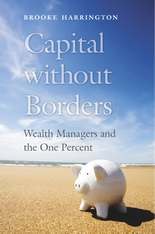
As I described in my previous blog post, Lose the Ownership; Keep the Wealth, in her book, Capital Without Borders, sociologist Brooke Harrington describes how the use of trusts to separate a wealth-creator from ownership of her wealth enables the wealth-creator to shield those assets from the vagaries of scrutiny, creditors, and taxes.

She shares how high net worth individuals (HNWIs) with as little as $1 million begin to shift priorities from growing their wealth to preserving it. Regulatory arbitrage is one of the preservation strategies used for this purpose.

Wealth Preservation and Regulatory Arbitrage

While titling assets under a trust is a broad and useful strategy, it also works and plays well with other strategies, such as regulatory arbitrage. Regulatory arbitrage is a simple wealth preservation concept with a cryptic name.

Have you ever witnessed (or experienced) a child who effectively manipulates his parents, playing one against the other? If Mom says “no,” he rephrases the request to Dad in a way he knows he’ll get a “yes.”

In this analogy, the child is the global elite and the parents are represented by different countries. Wealth managers are adept at negotiating the laws of each country to provide the best results for clients.

Regulatory arbitrage is choosing legal strategies or loopholes across countries that result in the highest amount of wealth preserved / lowest cost burden.

What Does This Mean for Philanthropy?

The use of regulatory arbitrage is perfectly legal, and it helps to explain why a search in the Offshore Leaks Database on the keyword “Foundation” yields so many results for foundations incorporated in Panama.

Unlike a trust, a Private Interest Foundation in Panama is based in Civil Law, which makes it much less likely to change. The foundation is not intended to manage active company business, but holds assets for the benefit of beneficiaries.

The Private Interest Foundation has many perks, including the following:

  • The owners can be anonymous and the foundation’s charter does not have to specify who does what or when; this can be handled in private agreements.
  • Owners can remain completely anonymous.
  • There are no taxes.
  • Creditors cannot pursue claims on it and liens cannot be levied against the foundation.

And while we often think of offshore accounts and exotic wealth preservation strategies such as regulatory arbitrage being used by only the ultra-wealthy, these tactics are available much lower down the wealth scale.

As an example, I clicked through the list of foundations in the Offshore Leaks Database until I found one linked to a name I could search on. The Valorie Foundation was connected to Dr. Juan A. Chiossone Kerdel.

A quick search on name-only suggests that it might be the same person as Juan Armando Ant Chiossone Kerdel, MD, MA, FRCS who is a practicing doctor at the University of Miami Health.

Billions of Shades of Green

In 2014, Bloomberg Businessweek published an article (and a fabulous visual chart) revealing how a trio of hedge fund magnates had used offshore entities to make charitable contributions of more than $10B. By way of comparison, The Robert Wood Johnson Foundation has assets of $11B, Fidelity Charitable has $21B, and Bill and Melinda Gates Foundation has $52B.

In 2017, David Callahan wrote an article about the same hedge fund philanthropists noting:

“But it was stunning to learn that one of the largest philanthropic enterprises in American history—with assets several times larger than a well-known legacy funder like the Carnegie Corporation—had been operating in total secrecy.”

So, while fundraising research will necessarily continue to pursue the gift capacity rating game, I leave you with two parting thoughts to keep in mind as you and your organization seek to build relationships with HNWIs:

  1. People give for their own reasons – understanding motivations for giving is far more important than finding an “accurate” gift capacity amount.
  2. HNWIs may have less, but often much more wealth available for philanthropy than you can imagine.

Additional Resources

Key Concept: Lose Ownership, Keep the Wealth

It took a vacation, but I finally read the book, Capital Without Borders, written by sociologist Brooke Harrington. Reading a well-written book like this makes it so much easier to identify key concepts and muse on how they apply to other situations, such as fundraising research, of course! There were a few prospect research insights I’d like to share, starting with the humble but mighty trust.

Lose Ownership, Keep the Wealth

A key concept upon which everything in the book hinges, is the use of trusts to separate the wealth-creator from his or her wealth. Sounds counter-intuitive, right? If I create staggering wealth, I want to retain ownership, preferably for as many generations as is reasonably possible.

There are many different kinds of trusts and the laws governing them have transformed as invisibly to the public as an alien Skrull in the recent movie rendition of Captain Marvel! But the essential premise of a trust is that ownership of an asset is transferred to the trust by the wealth-creator and under the control of the trustee. The trustee might be the wealth-creator, but for the very wealthy, it is way smarter to make the trustee your wealth manager.

The DAF Example

One way to understand the importance of the trust transformation is to compare it to the Donor Advised Fund (DAF). What are the major benefits driving people to DAFs? I’ve put the following benefits in order of importance.

  1. Anonymous giving
  2. Indirect ownership
  3. Beneficial tax treatment (a/k/a tax avoidance strategy)
Privacy / Anonymity

Privacy is most frequently of paramount concern to someone looking to preserve great wealth for as many generations as possible. A DAF is a fund of a larger entity, such as a community foundation, and grants made from the DAF are not required to be reported to the public. Trusts also provide a lot of privacy and, when used skillfully, can offer complete anonymity.

Indirect Ownership

Indirect ownership is a means of preserving wealth, even in a DAF. When a wealth-creator gives to a DAF, s/he loses ownership of the money – but does NOT lose influence over that money, the ability to “advise” on giving. This is the same with a trust. The trust owns the assets that were transferred by the wealth-creator, but the wealth-creator retains influence over those assets, if only through his/her relationship with the trustee.

Tax Treatment and Debt Avoidance

The implications of indirect ownership are great. In the case of a DAF, the money gifted to create the DAF receives favorable tax treatment (depending upon specific tax circumstances, of course).

Generally speaking, if a wealth-creator does not technically own the assets/money in a trust, there are more opportunities to avoid taxes on that wealth, and debt owed by the wealth-creator might not be collectible from the trust. The benefit of influence over the money is kept, but the risk of taxes and debts can often be reduced or avoided altogether.

Skillfully using trusts in this way is completely legal.

Why it Matters for Fundraising and Research

Development officers have been some of my best teachers over the years. I’ll never forget the time when someone questioned my capacity rating, suggesting that holding real estate in a Dynasty Trust implied much greater capacity to give than the rating I had provided. She was right!

And now that I am in roles where I teach other prospect research professionals, I find myself frequently challenging them on the technical aspects of ownership.

For example:

  • The prospect had two big tax liens in the past five years, resulting in a lower capacity rating.
  • The prospect had a bankruptcy a few years ago, so there isn’t major gift capacity.
  • The prospect transferred ownership of the real estate (company, plane, whatever) to a family trust and is not the trustee, so I didn’t include that in the gift capacity rating.

Now that you understand a little bit of tax and debt avoidance strategies using trusts to separate ownership of wealth from the wealth-creator, while still maintaining influence, can you see the problem with the three statements above?

The one example that sticks in my mind is a prospect I researched who was from a family of extraordinary wealth. He had a big, ugly (and public) divorce and the judge ruled that his wife should get half of his family trust. But when he and the court asked for the money from the trustee, the trustee refused. It was determined that the trustee was within his full legal right to refuse and the ex-wife was unable to collect her millions.

Chalk one up for debt avoidance and wealth preservation strategies using trusts!

Did that prospect have wealth? You bet! I’ve researched other prospects who have had multiple bankruptcies and continuously emerge from them, having assets in various trusts and companies that are all walled off from each other.

Fundraising Action Steps

It isn’t always possible to know a prospect’s gift capacity with any degree of accuracy, but you can almost always identify key wealth indicators that separate the affluent from the high net worth individuals (HNWIs).

  • When you see a trust or multiple companies that don’t appear to have any business purpose (such as LLCs that appear to multiply faster than rabbits), you probably have a prospect who can make a 5-year pledge of at least $100,000.
  • If your prospect was born into a HNW family, assume there are trusts, even if your prospect has no significant income. Every time I find a prospect who lives very well and is an artist, I immediately look for the family-wealth connection!
  • When you have spotted the trappings of great wealth and realize this person is a HNWI, keep this rule of thumb in mind: the higher the net worth, the fewer the visible assets.

I hope you found this key concept useful for your work in fundraising and research. Stay tuned for next month’s blog post where I demystify regulatory arbitrage as a wealth preservation strategy. Regulatory arbitrage sounds exotic and intimidating, but fear not! I will break it down for you.

Additional Resources