Tag Archives: fundraising

Getting Started in Data Mining (It's easier than you think!)

I have had a few requests for articles on simple data mining techniques and the related database maintenance necessary to make the results meaningful. Look for my upcoming companion blog post on data mining resources, too.

Before we get started, let’s talk a little bit about what might be holding us back.

  • Fear that it’s too complicated – Not much anyone can do about this one, except you. Jump in! The water is warm!
  • Assumptions that leadership will not invest and support it – Data mining and analytics are keyword candy to leadership. Leadership loves to get intelligent answers to questions like “What percent of donors rated at $100K+ gave at that level?”
  • No clear understanding of the pain/need/goal – What keeps your leadership awake at night? Is it prospect pools that don’t perform? Finding leadership donors for the upcoming campaign? If you don’t know, you can’t make a compelling case for data mining.

Donor Database Reports

Do you remember that scene in the Sound of Music where Maria is trying to teach the von Trapp children to sing? She stops singing “Do-Re-Mi” and says, “Oh, let’s see if I can make it easier”. We can do that in data mining too. (I haven’t come up with a song yet, but I’m working on it.) Here is an easy and fun way to get started in data mining – explore all the canned reports in your donor database. I’m not kidding! Even if you have no idea what deep, insightful questions you want to answer, you can begin with reports.

Consider these common reports:

  • Consecutive years giving – When donors give many years, especially consecutively, it usually means they really like us. Who are these people? Do they have high wealth ratings? Could they be good planned gift prospects?
  • Top donors – Are all of your top-giving donors getting regular attention?
  • LYBUNT, SYBUNT, & new donors – Within these reports you might find donors capable of increasing their gift, some major gift sleepers, and some new donors with wealth.
  • Lifetime giving and number of years giving – So many forgotten donors can be found in this list as well as some very good planned gift prospects.

Digging a Little Deeper

MS Excel is on most of your desktops. If you take a little time to learn to use it – I’m not talking complicated formulas, just tips and tricks – it will truly open the world of data mining to you. Imagine that you pull a report into Excel with all of the key fields in the above reports (last gift date and amount, largest gift date and amount, lifetime giving, etc.). Add in wealth ratings if you have them.

Now consider this scenario:

Custom sort:  First by largest gift amount (descending), second by lifetime giving (descending), third by last gift date (descending)

Analysis:  By scrolling down the list you can see if any donors who have made larger gifts (largest gift amount) and have lapsed (last gift date). Is there some high lifetime giving low on the list? Why?

Imagine sorting first by wealth rating and then largest gift. How about lifetime giving and wealth rating? This is fun! (I told you the water was warm.) Just be sure to watch your time. Prospect researchers have gotten lost in the data mining game.

The Secret Data Mining Trick

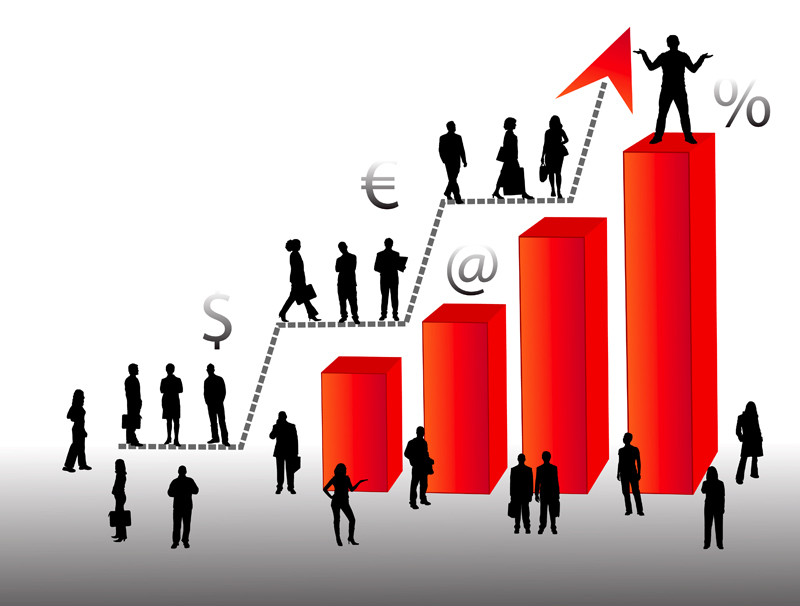
The secret trick to analyzing your donor information is to understand your fundraising fundamentals. Remember the fundraising pyramid?

The pyramid illustrates your areas of opportunity:

  • Occasional: Did that first-time $1,000 donor get personal attention?
  • Annual: Are there small annual gift planned giving prospects in there?
  • Annual: Can we motivate annual donors to move up a giving level?
  • Major: Do any of your major gift donors have unexplored planned gift potential?
  • Planned: Are there any planned gift donors who could make a cash gift?

Common Data Errors that Under-Mine Your Efforts (pun intended)

Now that you have the idea that you can sort on specific fields in your donor database, you will very soon realize that even sorting becomes problematic if the data is full of errors and omissions. Use your blossoming interest in data mining to clean up the database! Then when you are ready for more complicated data mining challenges, your data will be ready for you.

  • Data errors in any of the fields you pull – e.g., incorrect or missing dates or dollar values
  • Duplicate records – often happens in gift entry or multiple hands in the database
  • Deceased or bad address – if you don’t mail to your list, you probably aren’t getting your list cleaned; if you are mailing, you might not be getting a file back from the printer to update the records

What can you do about problems like these? People don’t usually like to hear this, but you need some documentation.

  • Your database probably has some maintenance reports. Set up a schedule to run them and fix the errors.
  • Do you need to run a report of all changed records daily or weekly?
  • Gift entry staff should be trained to search for the donor name first, instead of entering a new record. As in, create your own training manual for how gift entry is performed in your organization.
  • Someone should review all gifts entered, probably daily.

Robert Weiner is a consultant with some excellent free articles about keeping your database up to snuff. You can find his articles here: http://www.rlweiner.com/articles

Taking Data Mining to the Next Level

Once you have your data in order, some understanding about how the information is stored, how you can retrieve it, and what kinds of things it can tell you about your donors and prospects, I suspect you will be a lot more likely to sign up for that data mining webinar or take advantage of the APRA Analytics Symposium. It feels good to be ready, doesn’t it?

Get Worried! About Asking for Too Little

When was the last time you had a knot in your stomach because you were worried you were going to ask for too small of a gift? If you are like many fundraisers, the answer is not often enough!

  • $8 Million gift from Glenn Korff to University of Nebraska-Lincoln’s School of Music.
  • $2 Million gift from Gene Feaster, an inventor of Superflab to the University of Kansas.

How badly do you want gifts like these?

The wealth screening companies tell us – perhaps with some bias – that organizations which raise more money and get whopping big gifts, screen their donor database for wealth regularly. This does not surprise me. Does it surprise you?

Bias aside, large organizations are much more likely to worry about asking for too little. It’s a high-pressure, go-get-the-gift environment and the winners are those receiving the largest gifts. And large organizations invest in fundraising, including prospect research.

Research gives them the facts that can validate what they suspect, or disqualify a prospect, or find new information that impacts gift type and size.

But what can I do?
Hey! I heard that! “But we have no money for a screening.” “We can’t hire a prospect researcher anytime soon.” “Our leadership won’t invest in research.”

And I have a response! (It wouldn’t be much of an article if I didn’t, would it?)

Whether you are a smaller organization dreaming big or one of a hundred gift officers, you are in control of your own behaviors. And here’s a few winning behaviors to adopt – and maybe even influence others, like your leadership.

Get worried about asking for too little.
Words matter. When you talk strategy for a gift, state your target ask amount and then say, “But I’m worried that might be too low.” (That was easy!)

Get wealth-educated.
Pay attention to articles, blog posts, studies and conversations about wealth. Because when someone asks you – “why do you think that ask is too low? – you will need an answer.

  • He sold one company. Could there be others?
  • He seems like the kind of guy to have a vacation home, but I don’t have the tools to find out.
  • Jane board member says he owns a number of restaurants, but I don’t know for sure.

Get search savvy.

No, you don’t have to be a full-fledged prospect researcher, but every fundraiser should be able to find key information online about prospects. When was the last time you visited your county tax assessor’s online database? How about Zillow.com? Do you have rule-of-thumb formulas to create capacity ratings?

Wealth screenings are one tool in the research toolbox. Even so, I hope you are actively thinking about a future budget that includes a screening. You might not need it now, but you will need it sometime soon.

Your mission and the people and causes you serve deserve funding. And if for no other reason, that should get you concerned about asking for too little.

If you want help finding information about your prospects, click here to contact Aspire Research Group.


Other Resources You Might Like:

Fall Fundraising Trends by Preeti

Filla Fast Favorite Links – a categorized list with wealth studies at the bottom

Re-Wiring the Trusty Profile

There’s a bit of buzz about whether prospect research is going to get dumbed down by smart software products or if it will get lifted into the realm of strategy and management. The reality is probably a bit of both. Today I thought I’d bite off one little piece of the bigger conversation. I want to take a tried and true prospect research task – the trusty profile – and toss it up in the air to discover a new perspective on its utility and value.

Conversation Starter

Sabine Schuller jump-started the dialogue on the PRSPCT-L list-serv with an article,Is a Googlized Workplace Replacing Dedicated Competitive Intelligence Resources? Substitute “prospect research” for “competitive intelligence” and you can join in the exchange. Helen Brown did! She opined on the topic with a blog post, Prospect Research’s Strategic Advantage, suggesting that prospect researchers offer “experience, context, and strategy”. Mark Noll and Chris Mildner commented about the need for prospect research to concern itself with ROI. They told us we have to demonstrate how research translates into increased gift levels.

Can We Re-Wire the Humble Profile?

As you might have noticed, the topic has many layers of discussion points and profiles are somewhere amongst them. Can we re-wire the humble profile to make it more strategic and cost efficient? What does that mean?

I’ve heard conversations along these lines:

  • The paper profile is dead. It should all go into the database.
  • Research should be finding the basics – ability, inclination, linkage/affinity – and spend not a minute more.
  • My gift officer was struggling to connect with a prospect and I dug deep and found some nuggets of interest that helped him to solicit and receive a multi-million dollar gift.

My two cents? They are all correct! Prospect research is positioned differently at each organization depending upon the structure and culture of its fundraising operations. But sometimes people are so excited about their success with their hammer that they begin to view every problem as a nail, even if it’s a screw.

My favorite type of client to work with has no research staff and is tasked with raising million-dollar gifts. She relies on the paper profiles to give her really deep insight into what makes this prospect tick because the pressure is high to get the largest gift possible for her organization. She doesn’t hesitate to call me and question the information so she can feel confident in her ask amount.

It’s my job to know how much and what kind of detail to include.

That’s a big sentence. And it leads me to an interesting interaction I had recently with another client. We were talking about her need for corporate research. She wanted all the usual info, but they had specific strategies they were focused on for corporate prospects. My profiles are typically organized to best present the information collected, but what I was hearing was that she wanted to know exactly how to approach the company for each strategy.

So I reorganized the profile to highlight info relevant to each strategy first and then other sections to hold traditional, but necessary, information second. I did the first couple of profiles to be sure it worked and, well, it felt awkward. It took extra effort to parse the information into the right spots. I truly had to think first about the strategy and second about the information I was scanning. But it kept the profile laser-focused on what was most important to creating the cultivation and solicitation strategy. That felt good!

But, What About You and Your Office?

When deciding how much and what kind of profile types your prospect research department should be producing, I recommend engaging your fundraising staff in dialogue around these big questions:

Does everyone understand…

  • What the three main functions of prospect research areas are? (Prospect Identification or proactive, Prospect Profiling or reactive, and Relationship Management)
  • How those functions affect and support their specific specialty (events, annual fund, major and planned gifts, alumni relations, etc.)?
  • Where they fit within the strategic goals for the organization’s overall fundraising?

(Just remember that, as in search technique, less is often more. We’re not talking two weeks of training, but a simple, framework discussion.)

With everyone on the same page, now you can begin to have a discussion about things like if and when prospect research should be doing in-depth, six to twelve hour individual research profiles or who should be preparing bullet points for major gift prospects at events.

Now everyone knows where the priorities lie and how prospect research is going to be used to support them. It might not make everyone happy, but hey, happiness is a personal journey, right?

Onward to the Future!

Yes, the world is a-changing. We need to have the confidence and courage to re-engineer our services. We need to become more competitive and tie what we do to its impact on giving. And as we pursue big-picture discussions about the future of our profession, we need to recognize the diversity of our experience, context and strategies to create best practices focused on problem-solving.

With professionals like Sabine Schuller, Helen Brown, Mark Noll, Chris Mildner and You, I have no doubt we can ride these waves of changes with aplomb. I can’t wait to hear what you have to say!

5 Tips for Finding Your Prospect’s Children

Knowing whether a donor prospect has children is a critical piece of information, but even more important for planned giving prospects. According to a study by Russell N. James III, J.D., Ph.D., Assistant Professor at the University of Georgia*, the absence of grandchildren as an indicator of likelihood to make a planned gift trumped even giving history – by a wide margin. Yes, go ahead and read that sentence again!

After those findings were presented at AFP’s International Conference I received multiple inquiries asking if there was a way to append child relationships to the donor database. Thank goodness the answer is “no”! I’m not confident that a centralized database of familial relationships is in our best interest generally. But it sure would be a powerful piece of information in our ability to predict inclination to give.

Whether you are a frontline fundraiser or a dedicated prospect researcher, there are a few ways to tease out information about children when it might not otherwise be obvious.

1.  Biographical Sources

The first places to look are biographies, obituaries and wedding notices – any place where family information is described. Sometimes it is tucked at the end of the executive’s company biography and may or may not include names. Sometimes the Who’s Who listing is detailed. Other times a search engine might find a genealogy page for your prospect’s family.

2.  In the News

Many of you have access to newspaper and other news databases online with the use of your public library card. Other news articles show up in search engine results. This is often a good place to find references to children and grandchildren.

3.  Search on Address

I like to use Lexis Nexis for Development Professionals (LNDP) and perform a “People” search using only the home address – especially when the prospect has lived there for a long time. But you can also use a site like www.switchboard.com and do a reverse search by address. Any search that will give you a list of the names of the people who have been associated with that specific address is useful. The bonus from the LNDP search is that those addresses are referenced against voter’s registration and other sources and a birth year is often included in the search results. This gets me closer to uncovering how likely those associated names are to being children, instead of other family members.

4.  Giving and Private Schools

When a prospect gives regularly to a private school, especially one from which s/he did *not* receive a diploma, I like to perform a search in Google of the school’s website. You can use the Google Advanced Search form, or type in your own. It looks like this:  LastName site:schoolname.edu   Many times I have found likely children’s names, and sometimes even grandchildren who are attending or have attended that school.

5.  Social Media

If your prospect is active on Facebook, Twitter, or other social media websites, you might be able to tease out family relationships. Many times the prospect has tight privacy controls, but it is surprising how much can still be discovered in the public domain. I have even encountered prospects who keep detailed, and very public, blogs online.

Once I have found a likely child’s name, I have often been rewarded by doing a couple of searches on only the child’s name. The younger generation is more comfortable sharing online and the child, especially if post high school, might share parent names and pictures more publicly. This helps us with making an accurate match, but we need to be careful when approaching the donor prospect.

Children are special and protected relationships, and the last thing we want to do is make the donor prospect feel like we are stalking her with our prospect research techniques! Without trust there will be no gift. Because of this, we as fundraisers need to be skilled at opening the conversational door to allow the prospect to tell us what we already know.

There is always room for error when we search for information anonymously. If you are a prospect researcher working with a new frontline fundraiser, it is worth having a conversation with him about how important it is to allow the prospect to confirm the information we find.

Other Posts You Might Like

Why Use a Researcher When There’s Google?

3 Actions That Demonstrate Your High Prospect Research IQ

* “Causes and correlates of charitable giving in estate planning: A cross-sectional and longitudinal examination of older adults”, a study conducted by Russell N. James III, J.D., Ph.D., Assistant Professor at the University of Georgia and published in 2008 (data from 1996-2007 collected by the University of Michigan Health and Retirement Study)

Are Your Numbers Lying To You?

Whether you are a frontline fundraiser or a prospect researcher, at some point you are faced with decisions about how much time and effort to put into measuring your fundraising success. But watch out! It’s all too easy to be deceived by the numbers you measure. You might be measuring the wrong items, get the wrong numbers altogether or get slowed down with numbers that don’t move you forward.

Are you measuring the right things?

No matter what size our organization, time and resources are limited. So where do you start in your fundraising office? With your donors, of course!

We know that we need to acquire and keep donors in order to provide sustaining income to support our organization’s mission. A recent client of mine was excited to tell me that his direct mail acquisition had a high rate of return. Nice!

But where were those donors now? It turned out that he had retained 14% of them. Ouch. Measuring acquisition without measuring retention is a mistake. Be careful that your measurements tell you the whole story about your donors.

Do you have the right numbers?

As you decide what to measure, keep asking yourself if the resulting number means better fundraising. For example, it might be exciting to count the number of people attending your event as it grows, but wouldn’t dollar-raised-per-person reveal whether your goal of raising more money was met? You may have a lot of attendees, but more people do not always translate into more dollars raised.

Are your numbers slowing you down?

Take the time to think about your goals and choose measurements that will reveal whether you are reaching your goals. Most of us have goals more or less like these:

  • Acquire X number of new donors = more dollars raised
  • Retain/renew X percent of all donors = more dollars raised
  • X number new major gift prospects identified/assigned = more dollars raised
  • Raise X dollars = more dollars raised

This is a very basic description, and your office may need a more complex set of measurements. For example, you may want to track different kind of dollars raised – direct appeals, major gifts, events. But don’t get caught in the trap of measuring too many things! You want to choose the most critical elements that will move everything else forward.

For example, my client decided to measure the retention rate of all donors instead of breaking it down to the retention of new donors acquired through direct mail. With a staff of three they only have time to focus on the most important measurements.

Ask yourself, “What are the key items that will move all of our efforts forward”? Set goals and measure those items religiously.

If you try to measure too many things or perform more complex analysis all of the time, you run the risk of bogging down your fundraising energy and effort.

No matter what your fundraising role you play, your actions should result in more money raised. As fundraising leadership, you need to determine the key goals that will move everything forward. As a prospect researcher you often play the role of “data translator”, helping frontline fundraising to translate goals into measurements. No matter what your role is, always ask if the items being measured and the numbers being reviewed translate into more money raised.

Alert! Speakers Now Give Tweetable Insights

As I was honing my tweeting skills at the 2013 AFP International Conference this week, it did occur to me that some conference sessions lent themselves better to tweeting than others. In the same way that the general public has been trained to speak in news-byte sentences in the hopes of being featured on television, clearly some presenters are leading the way in presenting tweetable insights – whether they are doing it consciously or not!

Looking back on the AFP conference session I presented with Helen Brown and Debbie Sokolov, we could have created more tweetable insights in our “theory” overviews, but I don’t regret that we included Debbie’s storytelling. Presenting the structure for thought and learning and then weaving it into a real life story helps with retention and deepens understanding. Stories provide the context to which our brains can connect the theories. Maybe the answer is to provide the tweetable 140-character summary on the PowerPoint slide while the story is being told!

And there is another issue with the tweeting craze and really, with the information overload. As we all board cars, trains and airplanes to head home and return to work, once tweeted, is it forgotten? What do we do with all of the information we learned? How do we act on it? Will we be able to translate a trend or someone else’s story into our reality?

One of the things we lost forever at the end of our presentation on prospect research was the pile business cards people left for us. We turned around and poof! They were gone.

If you were one of those generous card givers, I hope you will comment here or email us so we can continue the conversation. Please also email me, Jen Filla, or Helen Brown or Debbie Sokolov if you learned something new, but are struggling with *exactly* how to implement it, if you need the *detailed* steps to make it happen.

Our presentation was designed to be an overview and yet our attendees were craving the details, the formulas, the exact solutions:

  • Some of that detail is readily available and we can point you to it.
  • Some of your questions can be answered in a short conversation.
  • And sometimes those exact solutions require an assessment and a plan.

For me, the biggest joys at the conference were being a part of the more than 4,000 people dedicated to philanthropy and fundraising and being a part of the giving by contributing a new book, some prospect research tactics and techniques, and new friendships.

About the Author

Jen Filla is president of Aspire Research Group LLC where she works with organizations worried about finding their next big donor, concerned about what size gift to ask for, or frustrated that they aren’t meeting their major gift goals. She is also co-author of Prospect Research for Fundraisers: The Essential Handbook.

You can follow Jen on Twitter: @jenfilla

When Should You Look for Cold Prospects?

It's COLD out there!

It’s easy to tell fundraisers to look at their donors first, but are there times when it makes sense to look outside the donor pool? If so, when and how should you do it?

This may sound obvious, but usually the best time to go after cold prospects is after you have looked in your donor pool and need more. Apart from general donor acquisition, this might happen for a few reasons including:

(1) You need more major gifts than your current donor pool can support

(2) You need qualified prospects to fill board member positions

(3) You are strategically reaching out to a new constituency

Branching Out

When you are looking for more major gifts or new board members, a great technique is Branching. This technique is described in Prospect Research for Fundraisers: The Essential Handbook (p.26) and you might also hear it described as Relationship Mapping (p.175). The idea is that you take your high-powered, well-connected donors and trustees and put them at the center, branching their connections outward.

A simple, but great example, of this technique is demonstrated by Dan Blakemore in his blog post, “How One Web Search Led to a $20,000 Gift”. When the board chairman passed away and he needed to find donors for a named fund in his memory, Dan branched out from the board chairman’s connections to identify a donor who made a first gift of $20,000. Dan started with his existing donors, but he took an extra step outward and was successful. You don’t have to start with a huge project to get results.

Strategic New Direction

Branching exercises sometimes result in more of the same prospects because you are working within a network of connections. There are organizations that do not want more of the same. They make a deliberate decision to reach out to new and different constituencies. This might take the form of populating the board of directors with people who are more similar to the people they serve. It might also be a concerted effort to engage an entirely new group with the organization in a meaningful way.

In the book, Prospect Research for Fundraisers, we tell the story of Jeff Lee at Wycliffe Bible Translators (p.164). He was hired to build stronger fundraising efforts in Asian countries where Wycliffe operates, but also to build engagement with the U.S. Asian-American community, hopefully at some point in the future linking that engagement back to the home countries. Some institutes of higher education and other organizations are strategically building engagement with countries where new wealth is emerging, such as China and India. When you are starting out new there are usually few existing donors and relationships, so how do you go about it?

Building Up and In

In the U.S. there are many sources of information specific to industries, ethnic communities and more. For example, local Business Journals usually publish a “Book of Lists” each year. You can build a list of the top philanthropists in your community, the top business leaders and more. You can ask a researcher to build you a specific list, or as a frontline fundraiser you might start by, for example, joining a local association of Chinese business owners and using a researcher to help you get more information after you have identified specific individuals.

First you build up your list of cold prospects (some people call them targets, but that often sounds harsh to a fundraiser’s friendly ears) and then you make the inside, face to face connections, getting prospect profiles on individuals once you have made a connection.

Cold Prospecting Takes Effort

No matter how you go about it, cold prospecting consumes a lot of time and resources. Make sure you set yourself up for success. Following are some tips:

Plan & Track:
Make sure you have a plan in place. You wouldn’t just show up on a plot of land and build a house willy-nilly. Draw up a plan and track your progress periodically.

Polish Skills:
You may find it takes a different set of skills to engage a new group of people. Be sure to get any training you need. Network with colleagues who have done similar work successfully.

Educate Yourself:
You may need to broaden your knowledge of the culture and history, inside or outside of the U.S. Researchers can help you gather this information as well.

There are good reasons to do cold prospecting, but it needs to be treated with careful respect because of its expense. Just as you nurture donors acquired through direct mail to ensure you raise much more money in the long-term than the initial cost of acquisition, likewise you need to plan your major gift prospecting projects to ensure that they lead to large gifts and deep relationships.

About the Author

Jen Filla is president of Aspire Research Group LLC where she works with organizations worried about finding their next big donor, concerned about what size gift to ask for, or frustrated that they aren’t meeting their major gift goals. She is also co-author of Prospect Research for Fundraisers: The Essential Handbook.

Warning! Did You Recognize Your Million-Dollar Donor?

You are launching a campaign or pushing forward with a major gift initiative and finally have the budget to order some profiles. Yay! You pick the first name – a prospect you’ve met who comes across as wealthy – only to discover the capacity of the prospect falls under $100,000. So disappointing. What went wrong?

Even when an organization has performed a wealth screening, sometimes gift officers still gravitate toward lower-capacity prospects. Many times this is because they are not aware of the lifestyle and asset differences between affluent and high net worth. High Net Worth Individuals (HNWI) do not look like the typical fundraiser – you or me. They are different. And sometimes that can make us feel uncomfortable.

HNWI According to Knight Frank

The recently released Knight Frank annual Wealth Report helps to illuminate some of those differences. Many groups define a HNWI as someone with $1 million in net assets, but Knight Frank cranks it up to an individual with $30 million or more in net assets. Let’s give those numbers some context. Suppose your prospect is passionate about your mission and wants to donate 5% of her net assets.

  • At $30 million, she gives you $1.5 million.
  • At $1 million, she gives you $50,000.

Among these elite, Knight Frank finds the following:

  • London and New York are the top destinations in the world.
  • HNWI’s in North America own an average of 3.6 homes.
  • The top 3 most popular investments of passion in North America: Fine art, wine and classic cars

Affluent vs. HNW – Some Examples

One prospect I researched was so interested in wine that he founded a vineyard and winery – as a hobby! His capacity was very different from his partner’s, who also invested in the winery and ran the operations. The partner invested his savings and was earning his living. The prospect was a HNWI and his partner was affluent.

Another finding by Knight Frank was that 25% of HNWI’s net worth is accounted for by their main residence and second homes that are not owned purely as an investment. I researched a prospect who owned four condos on the beach in Florida. One of them was his home and the others, some in the same building, he held as investments and rented them to vacationers.

That is a very different picture from a prospect who owns a few condos on the beach, all but one purchased during an economic downturn, as well as home and a New York City condo. The prospect living in the beach condo appeared to manage his properties personally and likely earned income of around $100,000 – that’s affluent. The prospect with the New York City condo is a top executive who saw an opportunity to own valuable beach-front real estate near his favorite vacation spot and used cash to purchase when the prices were low – that’s a HNWI.

In Your Own Backyard

You don’t have to be an expert on how wealth and assets are accumulated and managed, but you do need to be a student of wealth to begin recognizing the difference between a prospect capable of a $1 million gift and a prospect capable of a $50,000 gift. If you are in a mid-west rural community your HNWI is going to look different from someone in New York. It’s up to you to know your community – although a skilled prospect researcher can always help you out.

As a frontline fundraiser, recognizing and embracing HNWIs is a valuable skill that could make a tremendous difference for the cause you serve. You might be out of your comfort zone at first, but you can get through that with education, practice and a little help from your peers.

Other Wealth Reports You Might Like

2012 Bank of America Study of High Net Worth Philanthropy

2011 Capgemini-Merrill Lynch World Wealth Report

About the Author

Jen Filla is president of Aspire Research Group LLC where she works with organizations worried about finding their next big donor, concerned about what size gift to ask for, or frustrated that they aren’t meeting their major gift goals.

Got retention? You'll need it for major gifts!

When the conversation turns to identifying major gift prospects out of a base of donors, we usually hear how a wealth screening will highlight those annual fund donors who have capacity. Presto! Like magic. And there is quite a bit of truth in that wealth screening picture. But what if your organization is small, your development staff number fewer than five, your ability to cultivate major gift prospects is limited by staff availability and you know most of your best donors? Paying for a wealth screening may or may not be a good investment right now.

And let’s be honest. Is your major gift program actually based on annual cumulative giving at your highest giving level? Is mastery of your database still in on the to-do list? If this is your world, then a focus on annual fund donor retention could go a long way toward improving your higher-end giving and prepare you for a future campaign or multiple-year, major gifts.

What you Want to Know

Most organizations have a system in place to provide extra attention to donors who give at or above a certain dollar amount. And most of us have heard about reporting on the following:

  • Lybunts – last year but unfortunately not this year
  • Sybunts – some year but unfortunately not this year

These are donors you will want to pick up the phone and call – most especially if your numbers are small, such as under 100. Make sure your calls are at least loosely scripted and sincere.

You might also want to consider keeping track of the following:

  • New Donors – What about knowing who all of your brand new donors were last year and what they are doing this year? New donors are expensive and we need to spend extra care to make them feel welcomed to the family. Don’t be afraid of calling on the phone.
  • Upgraded and Downgraded – What about knowing who gave a higher or lower gift? Either action begs for a response.

How this Helps you Raise More Money

Really good stewardship, the kind that is timely and genuine, depends upon an efficient use of your time. You need to know which people on the list should get additional attention. If you can learn how to use your database to track information like this about your appeals, then the following are likely to happen:

  • Your donors will tell you what they want to know and how they want to hear it.
  • You will find out why people drop out and why some become even more excited about your organization.
  • You will get much better at using and maintaining your database.
  • You will learn about common wealth indicators (luxury vacations, multiple homes, etc.) from actually talking with your donors.
  • You will have conversations that deepen donors’ engagement with your organization and open up opportunities to discuss planned and major gifts.

When these things happen on a regular basis, you will be able to respond to your organization’s donor trends, which may not be the same as other organizations, and you will raise more money. Practice this kind of donor tracking and touching and your donors will be ready to support you when the next big fundraising adventure – like a capital campaign – comes knocking on your door.

Originally Posted on the Blog of the Nonprofit Leadership Center of Tampa Bay

Jen Filla was guest blogger for the Nonprofit Leadership Center in support of her upcoming workshop: Using Prospect Research to Boost Giving. Join Jen for this interactive program as she demystifies prospect research and teaches you to use prospect research tools and resources efficiently and effectively to boost giving. Click here to register for this program on 2/20/2013 from 9am-noon.

Jen is is president of Aspire Research Group LLC where she works with organizations worried about finding their next big donor, concerned about what size gift to ask for, or frustrated that they aren’t meeting their major gift goals.

Looking for Annual Appeal Examples?

  • ClickLinks posted a contest for the best annual appeal. View their results by clicking here.
  • SOFII.org is an all-around useful resource for everything annual appeal.

Making Analytics Accessible to All

In “Geek Philanthropy: Data Huggers”, the Economist (10/20/2012) tells the story of DataKind, an organization dedicated to using data analytics to help nonprofits. As the Economist points out, businesses are actively using advanced analytics to improve their efficiency. Nonprofit organizations have lots of data too, but usually not so much money. Could the benefits of data analysis – improved program and fundraising outcomes – be within your organization’s reach?

According to their website, DataKind organizes three distinct efforts to share analytics with nonprofits:

  • DataDive™ – a weekend event that teams three selected social organizations that have well-defined data problems with volunteer data scientists to tackle their data challenges. These events are completely free and voluntary and serve to energize the base, provide direct services to organizations, and to enlighten social sector groups to the power of using data in their programs.
  • DataCorps™ – a select group of data scientists who work on volunteer or contract data projects part-time. These members work for one to six months on targeted data projects that they flesh out with the organizations that apply. Our volunteers are paid by the organization or are housed within private companies who take on the projects (e.g. Google gives 20% time to three scientists for a month to execute a project).
  • In-House Data Staff – We maintain a full-time staff of data scientists that take on the most pressing and high-impact problems for a variable length of time. These full-time employees are paid directly for their services by the organizations involved.

The Economist described a DataDive, affectionately called a “hackathon”, in San Francisco. DataKind volunteers analyzed the data from Mobilising Health, a non-profit group that connects rural patients in India with doctors in far-away cities via cell phone. Among other things, DataKind helped Mobilising Health to take more account of urgency and to direct requests to the most responsive doctors.

Improving efficiencies and outcomes of an organization’s programs using a dataset like the cell phone records and text messages was great for all involved. The organization received the results, plus the ability to better track and respond to information going forward. The data scientists worked on a project that challenged their skills and taught them new skills.

We might call Mobilising Health a very “ripe” subject for data analysis. They had an organized, well recorded set of data. Thank you cell phone companies! But what about organizations that are offering after school programs or programs at domestic abuse shelters? And what about fundraising operations?

Notice that the only free service DataKind offers is the hackathon weekend for “well-defined data problems” such as Mobilising Health. What do we know about the majority of nonprofit organizations? If the information is even recorded, the data is often “dirty” and leadership unaware of what types of problems data analysis can help them solve. The potential for improved mission performance through data analysis is exciting and very, very real! But so is the underwhelming enthusiasm for data collection and maintenance.

Not all of us are born as philanthropy geeks and for many people, the care and maintenance of data is about as thrilling as watching grass grow. But understanding the value and potential of data collection – significantly improved mission outcomes – is pretty glamorous.

When it comes to fundraising, Joshua Birkholz wrote a very friendly read – Fundraising Analytics – for the Wiley/AFP Fund Development Series. The most important part of the book is the beginning where he talks about translating your fundraising goals into questions that can be answered with data. Once you understand what it is you want to know, recording, maintaining and analyzing the data can be done by others. Maybe even a DataKind hackathon crew!

Prospect research professionals are your neighborhood philanthropy geeks. We help you translate your goals into questions and translate your questions in data recording and reporting. The ability to monitor your fundraising performance and react to external and internal donor trends can lead to impressive dollars raised – and transform your ability to perform your mission.

Have you worked with a friendly neighborhood philanthropy geek today?

About the Author

Jen Filla is president of Aspire Research Group LLC where she works with organizations worried about finding their next big donor, concerned about what size gift to ask for, or frustrated that they aren’t meeting their major gift goals.

Other Articles You Might Like

The Future of Donors in Your Data

CoolData Blog by Kevin MacDonell

5 ways to Use Donor Ratings