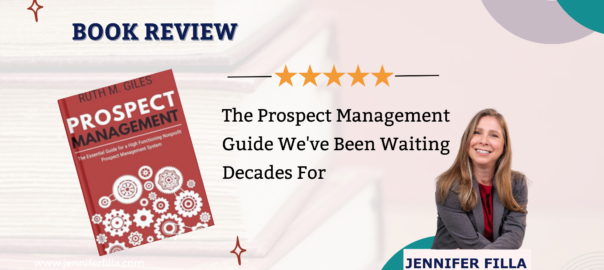
Prospect Management: The Essential Guide by Ruth Giles
Here’s a question for everyone in fundraising research and prospect management: How have we been implementing moves management and prospect management for decades without a comprehensive, practical guide to actually building these programs?
We’ve all been winging it with bits and pieces—a conference session here, a colleague’s advice there, maybe some tribal knowledge passed down from our predecessors. But a solid, soup-to-nuts guide on creating, implementing, and maintaining a robust prospect management program?
That didn’t exist.
Until now.
Enter Ruthie Giles (And Her 200+ Page Solution)
If you’ve been to any prospect development conference in the past decade, you know Ruthie. She’s the speaker who makes prospect management feel less like database drudgery and more like strategic chess. Fun, brilliant, and overflowing with practical wisdom.
She’s taken all of that knowledge—plus decades of experience building and fixing prospect management programs—and distilled it into Prospect Management: The Essential Guide for a High Functioning Nonprofit Prospect Management System (published 2025).
 Prospect Management: The Essential Guide for a High Functioning Nonprofit Prospect Management System by Ruth Giles is available now. Get your copy and start building the prospect management program your organization deserves.
The Structure: From Skeptics to System
The book is organized into three brilliantly logical sections:
Section 1: Preparing Your Case for Prospect Management
Section 2: From Planning to Implementation
Section 3: Post-Implementation
Excited yet? You should be.
Why This Book Matters Now (Hint: It’s Not Just About Process)
AI is the latest—and fastest—iteration of information technology pushing our field to new speed limits. If you want to stay relevant (let alone advance in your career), you need to persuasively influence decision-makers to make smart investments in prospect development.
Which is exactly why Section 1 includes an entire chapter on change management.
Because here’s the truth: The best prospect management system in the world is useless if you can’t get buy-in to implement it.
The Chapter That Changed How I Think About Portfolio Meetings
Ruthie doesn’t hold back on step-by-step instruction. Every piece of building a prospect management program is here including the frameworks, the templates, and the hard-won insights.
But my absolute favorite chapter (the one with two bookmarks and a coffee stain) is Chapter 14: The Giles Method – A Multi-Meeting Approach.
Finally. Clarity.
Finally, words for what I’d been fumbling to articulate for years.
Ruthie breaks down the three very different objectives of prospect management meetings and shows you how to create three separate meeting types to accommodate them:
- Data Optimization
- Portfolio Strategy
- Prospect Strategy
I’m not giving you the details. Because every practitioner should have this book within arm’s reach—on your bookshelf, in your e-reader, maybe both.
Who Needs This Book
New to prospect management? This is your roadmap. Everything you need to build a program from scratch without reinventing wheels that Ruthie already perfected.
Been practicing for years? This book provides the depth of perspective and theoretical framework our field has been desperately lacking. Ruthie has that rare gift of seeing the structure beneath the practice—which means you can take her solid framework and build something bespoke for your organization.
A prospect management program that actually hums.
The Bottom Line
We’ve been waiting decades for this book. Now it’s here, and it’s everything we needed it to be: comprehensive, practical, and written by someone who’s actually done this work.
Whether you’re making the case for prospect management to skeptical leadership, building your first program, or optimizing a system that’s gone stale, this book belongs on your desk.
Right next to your coffee. You’ll be referencing it that often.
Additional Resources
- Ruthie Giles: LinkedIn | Website | Book | Connect with her on LinkedIn to catch her on her speaking tour!
- Prospect Management Meetings that Work | Webinar | Ruthie Giles and Staupell Analytics | Free video replay | 2025
- The Ebb and Flow of Prospect Management with Ruthie Giles | Prospect Research #ChatBytes with Jen Filla | 2025