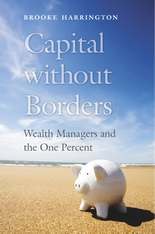
It took a vacation, but I finally read the book, Capital Without Borders, written by sociologist Brooke Harrington. Reading a well-written book like this makes it so much easier to identify key concepts and muse on how they apply to other situations, such as fundraising research, of course! There were a few prospect research insights I’d like to share, starting with the humble but mighty trust.
Lose Ownership, Keep the Wealth
A key concept upon which everything in the book hinges, is the use of trusts to separate the wealth-creator from his or her wealth. Sounds counter-intuitive, right? If I create staggering wealth, I want to retain ownership, preferably for as many generations as is reasonably possible.
There are many different kinds of trusts and the laws governing them have transformed as invisibly to the public as an alien Skrull in the recent movie rendition of Captain Marvel! But the essential premise of a trust is that ownership of an asset is transferred to the trust by the wealth-creator and under the control of the trustee. The trustee might be the wealth-creator, but for the very wealthy, it is way smarter to make the trustee your wealth manager.
The DAF Example
One way to understand the importance of the trust transformation is to compare it to the Donor Advised Fund (DAF). What are the major benefits driving people to DAFs? I’ve put the following benefits in order of importance.
- Anonymous giving
- Indirect ownership
- Beneficial tax treatment (a/k/a tax avoidance strategy)
Privacy / Anonymity
Privacy is most frequently of paramount concern to someone looking to preserve great wealth for as many generations as possible. A DAF is a fund of a larger entity, such as a community foundation, and grants made from the DAF are not required to be reported to the public. Trusts also provide a lot of privacy and, when used skillfully, can offer complete anonymity.
Indirect Ownership
Indirect ownership is a means of preserving wealth, even in a DAF. When a wealth-creator gives to a DAF, s/he loses ownership of the money – but does NOT lose influence over that money, the ability to “advise” on giving. This is the same with a trust. The trust owns the assets that were transferred by the wealth-creator, but the wealth-creator retains influence over those assets, if only through his/her relationship with the trustee.
Tax Treatment and Debt Avoidance
The implications of indirect ownership are great. In the case of a DAF, the money gifted to create the DAF receives favorable tax treatment (depending upon specific tax circumstances, of course).
Generally speaking, if a wealth-creator does not technically own the assets/money in a trust, there are more opportunities to avoid taxes on that wealth, and debt owed by the wealth-creator might not be collectible from the trust. The benefit of influence over the money is kept, but the risk of taxes and debts can often be reduced or avoided altogether.
Skillfully using trusts in this way is completely legal.
Why it Matters for Fundraising and Research
Development officers have been some of my best teachers over the years. I’ll never forget the time when someone questioned my capacity rating, suggesting that holding real estate in a Dynasty Trust implied much greater capacity to give than the rating I had provided. She was right!
And now that I am in roles where I teach other prospect research professionals, I find myself frequently challenging them on the technical aspects of ownership.
For example:
- The prospect had two big tax liens in the past five years, resulting in a lower capacity rating.
- The prospect had a bankruptcy a few years ago, so there isn’t major gift capacity.
- The prospect transferred ownership of the real estate (company, plane, whatever) to a family trust and is not the trustee, so I didn’t include that in the gift capacity rating.
Now that you understand a little bit of tax and debt avoidance strategies using trusts to separate ownership of wealth from the wealth-creator, while still maintaining influence, can you see the problem with the three statements above?
The one example that sticks in my mind is a prospect I researched who was from a family of extraordinary wealth. He had a big, ugly (and public) divorce and the judge ruled that his wife should get half of his family trust. But when he and the court asked for the money from the trustee, the trustee refused. It was determined that the trustee was within his full legal right to refuse and the ex-wife was unable to collect her millions.
Chalk one up for debt avoidance and wealth preservation strategies using trusts!
Did that prospect have wealth? You bet! I’ve researched other prospects who have had multiple bankruptcies and continuously emerge from them, having assets in various trusts and companies that are all walled off from each other.
Fundraising Action Steps
It isn’t always possible to know a prospect’s gift capacity with any degree of accuracy, but you can almost always identify key wealth indicators that separate the affluent from the high net worth individuals (HNWIs).
- When you see a trust or multiple companies that don’t appear to have any business purpose (such as LLCs that appear to multiply faster than rabbits), you probably have a prospect who can make a 5-year pledge of at least $100,000.
- If your prospect was born into a HNW family, assume there are trusts, even if your prospect has no significant income. Every time I find a prospect who lives very well and is an artist, I immediately look for the family-wealth connection!
- When you have spotted the trappings of great wealth and realize this person is a HNWI, keep this rule of thumb in mind: the higher the net worth, the fewer the visible assets.
I hope you found this key concept useful for your work in fundraising and research. Stay tuned for next month’s blog post where I demystify regulatory arbitrage as a wealth preservation strategy. Regulatory arbitrage sounds exotic and intimidating, but fear not! I will break it down for you.
Additional Resources
- Capital Without Borders | Brooke Harrington | 2016
- Selected Works of Brooke Harrington | Harrington is an academic and has written widely on the topic of wealth; this is her personal website
- Trusts | Investopedia | 2019 | Great primer on trusts with examples
- What is Wealth Management? | Forbes | 2014 | Nice article describing how wealth managers are different from financial advisors



 I will admit to being fascinated by, if not obsessed with, the path that leads to a major gift program for smaller nonprofits. What I hear and read about the most are large nonprofits, most of which are in higher education.
 Ratings… indicators… categories – whatever the name, we use them to help us make sense of too much data. We use them to solve the problem presented in the question: Where or with whom do I get started? They help us navigate the world. But they can also limit our world – and our ability to feed the prospect pipelines of the future.
 I get it. Your organization is not going to ask for millions even if the prospect could give millions, so why should you spend your limited emotional energy trying to understand HNWIs (high net worth individuals) and global wealth trends? The clear majority of nonprofit organizations in the U.S., around 80%, have operating budgets of $1 million or less.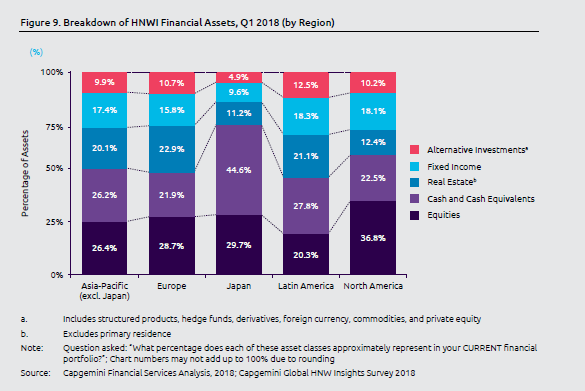
 If you ask a consultant the question “What is a Major Gift?” you will no doubt get the answer that “it depends.” Of course it does! But how does one figure it out? Surely we don’t guess what it is, do we? Lots of people consider $1,000 to be a threshold number. But what if a $100 gift would you give you goosebumps? Is that a major gift for your organization?
 Higher education and healthcare dominate the field of prospect research – and for good reason. They have income well above the funds they raise and these big budgets attract correspondingly big gifts. But those industries no longer dominate wealth/prospect screenings. Or at least, they don’t have to.
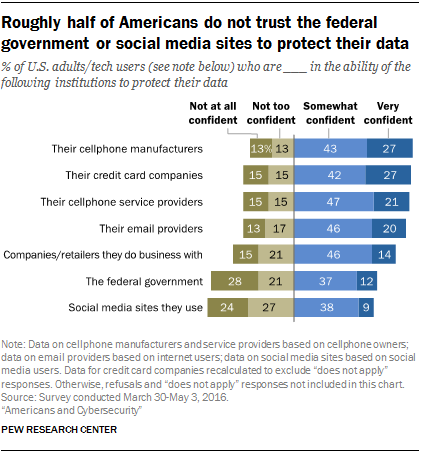
 Are you busy? Do you have any of these: full-time job, children, elderly parents, friends, and maybe even a few interests or hobbies? How are you supposed to keep up with social media and data protection and privacy issues, too? Well, if you are involved in fundraising where giving is predicated on donor trust, your choice is to invest some time and resources now or suffer big losses later. Ask Facebook.