I have been known to say: “If you say ‘no’ enough, you will probably get fired.” But what if you are a solo researcher and the development team comes at you with a tidal wave of requests? How can you create healthy work boundaries and avoid drowning?
Following are three ideas to help you stay in the moment while also giving yourself time to figure out how to get ahead of the problem.
1. Don’t fight the current.
Many solo researchers start off as database managers or development coordinators with the capability of doing much more. Some researchers come into the first research role created – with or without prior experience.
As you build a positive reputation it can lead to a strong current of research requests that feel random, disjointed, and extremely time consuming. What starts out as flattering can become overwhelming!
Do you have to start saying ‘no’? Sometimes you do.
But before you go there, give the following or some variation a try:
- “If I could get you what you want, what will you do with it?”
When you ask this kind of question you are floating with the current instead of trying to swim against it. It reduces the tension of having to commit to a ‘yes’ or a ‘no’ and allows you to discover things such as:
- They want to send out emails, not call each person individually – so you really don’t have to spend a lot of time qualifying the list. Can you pull an internal list with records that have emails? Can you purchase an external list of prospects?
- They just want to know what other places the prospect has given to (or something else specific) – so you really don’t need to do a full profile.
- They are planning ahead (woo hoo!) and don’t really need the work for months – so you can plan ahead too!
But what if it is yet another request for you to find prospects in the community and there is no clear strategy behind the request? Because we all know this happens A LOT.
For now, keep floating with the current and say something like: “That sounds interesting, but I’d really like to think it through some more. Is that okay?” And then…
2. Step back and take time to evaluate.
I’m going to continue with the prospecting example because it really is a common issue. Development officers have a very difficult job. They need to build relationships with humans and put money into the bank. These are two very different and sometimes conflicting goals.
Under pressure to bring money in, a development officer needs to get good at prospecting. Yes, they need to build relationships, but if they do it with people who are solid prospects, they can be more efficient and bring in more money.
If a researcher is being asked to prospect – especially outside the database – the assumption is that there is not enough value inside the organization’s base of donors. Or there may be a fear that the major gift pipeline is going to be running dry soon.
When you get asked to find prospects outside of the database, and you’ve gone through the “what will you do with it” and you need to answer, consider saying ‘maybe.’
If you tell someone ‘maybe’ then you have time to spend thinking through the bigger picture of prospecting at your organization. You can run some exploratory reports to find out things such as:
- Of the major gift prospects identified, are they being contacted? If not, asking why not is valid and there could be a good reason why not, which will help you do better prospecting.
- Has the donor base been rated for wealth and philanthropy or a predictive score for major gifts? If so, what is the unassigned potential of high affinity, high wealth prospects?
- What are all the prospect ID tactics that are underway now or happened in recent past? Were they successful?
Now you can schedule time to discuss the request and explore the bigger picture of how you can help the development officer focus on the best prospects to raise more money. You can re-state the need, review what makes a best prospect, and offer ideas on how to find those best prospects. Ideally, each step of the conversation is a two-way learning experience.
And in the end maybe you just have to do the prospecting request as asked. Either way, you will have learned a lot about prospecting, that development officer, and your organization’s constituency.
And if you are still being overwhelmed…
3. Talk ‘big picture’ with your manager.
Now that you have stepped back and evaluated the prospecting strategies and tactics as a whole and whether they have worked or not, you are ready to have a conversation with your manager. You need your manager to help manage the team’s expectations about what you can do, which means you need to get your manager on board with the best path forward.
Looking at the bigger picture usually makes for a better conversation with leadership. Do your best to stay out of the details of how you do the work and focus on the outcomes. In this kind of conversation, you start by walking the through the same steps as above:
- What are the fundraising goals?
- What does a best prospect look like for those goals?
- What are the ways prospecting has happened and how has that worked?
And then you get to ask…
- Should I be doing all of them? How should I prioritize requests?
Hopefully, this two-way conversation helps your manager advocate more effectively for you with the team.
Either way, be sure you are writing up each research project with the goal, tactics, delivery, and results. You can present these reports at staff meetings when you update the team on what you’re doing. It could help the development team hold themselves accountable for acting on your work.
Accept the things we cannot change.
Sometimes the development team or the fundraising culture at your organization just isn’t ready for your research prowess. If development officers simply don’t contact the prospects, then it doesn’t matter how many prospecting projects you perform, or profiles you create, or any of the research you are providing.
It might be time to say ‘no’ judiciously, or ask your manager to give you direction on how to prioritize requests.
Regardless of your situation, if you haven’t already, it is definitely time to consider what you want for your career and make sure you plan your next steps.
 I get it. Your organization is not going to ask for millions even if the prospect could give millions, so why should you spend your limited emotional energy trying to understand HNWIs (high net worth individuals) and global wealth trends? The clear majority of nonprofit organizations in the U.S., around 80%, have operating budgets of $1 million or less.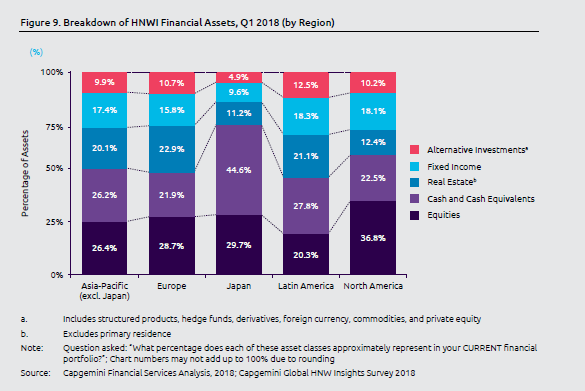
 If you ask a consultant the question “What is a Major Gift?” you will no doubt get the answer that “it depends.” Of course it does! But how does one figure it out? Surely we don’t guess what it is, do we? Lots of people consider $1,000 to be a threshold number. But what if a $100 gift would you give you goosebumps? Is that a major gift for your organization?
 Higher education and healthcare dominate the field of prospect research – and for good reason. They have income well above the funds they raise and these big budgets attract correspondingly big gifts. But those industries no longer dominate wealth/prospect screenings. Or at least, they don’t have to.
 Back in 2016 when Mark Noll posted “
 Imagine you emerge from a strategic planning session and your task is to raise more money from corporations. Your organization wants to expand its reach and you need to take the thousands of corporate donors in the database and transform them into a fundraising program. Why? Because everyone “feels” like there is a lot of opportunity there. Where do you start?
 “I need a profile on this person today…can’t you just Google it?” It’s the kind of question that makes prospect research professionals cringe. But why shouldn’t a development officer want it faster, better, and cheaper? Why is your organization paying thousands of dollars a year for research tools if it still takes forever to get the information needed?
 In this wonderful era of exciting, off-the-shelf prospect research tools and one-click-away data analysis, how is it that we still struggle to prioritize our donors and prospects? But we do. The results come in, the scores are assigned and yet there are still way more highly-rated prospects than our staff could possibly contact. Which names do we call on first?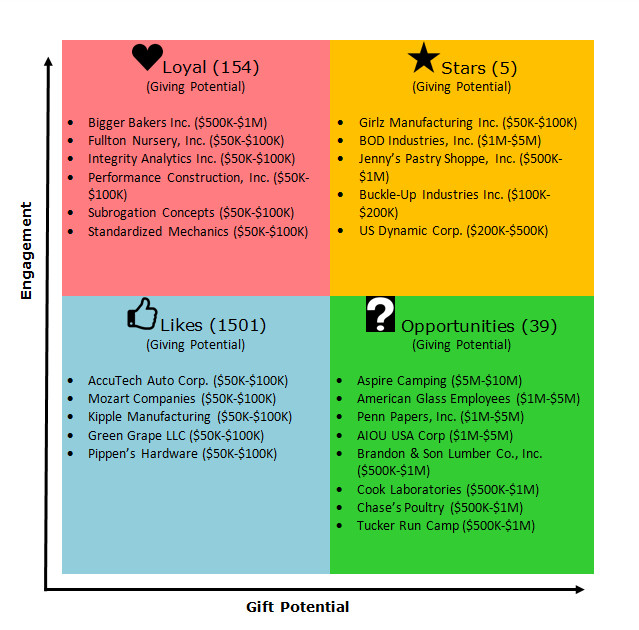
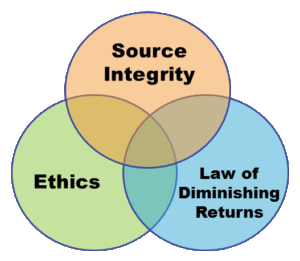
 In prospect research, the rule-of-thumb has always been to find at least one, and preferably two, corroborating sources for information found on a prospect. With the onrush of data, technology, and some of humanity’s evil proclivities, could that rule-of-thumb all too easily turn into a sore thumb?