 Back in 2016 when Mark Noll posted “When Technology Killed the Fundraising Star” I wasn’t wholly convinced that Skype was about to replace face-to-face major gift visits. Then, only a little over a year later in August 2017, The Chronicle of Philanthropy wrote “15 New Fundraising Ideas That Worked: Part III” and included one about digital-gift officers. Could it be?
When I look back over the PRSPCT-L list-serv posts in 2017, the eye-popping number of prospect research job openings really gets me thinking about more than the research we perform. It has me wondering about the conditions under which we do it. The nonprofit world is not particularly known as cutting-edge leadership when it comes to managing its workforce, but I muse about whether fundraising could lead the way in helping to redefine the workplace.
Development officers must travel and nonprofits and institutions have been right there with for-profit sales offices in establishing “field offices” where fundraisers work out of the home office in the geographic location where their prospects live. As digital-gift officers emerge, why do they need to be located in a specific place? And with nonprofit leadership skills in hot demand, more leadership candidates are using that leverage to demand to work remotely, too.
And then there’s fundraising research – interacting intimately with development officers and headquarters. Prospect research is also in a great position to work from home!
But you don’t have to listen to me speculate. You can listen to three real prospect research professionals tell you about their experiences working remotely. Warning: it isn’t all sugar and spice.
I was inspired by how candid the panelists were. Pioneers all three! And it felt so good to be among fellow prospect research professionals who share so many of the same experiences working remotely that I experience. It can feel isolating to be the only prospect research professional in a fundraising office, but that gets compounded when you work remotely!
If you work remotely you will love to hear the stories of these three women and if you don’t work remotely, but want to, you will gain a lot of practical and tactical advice. Developing rapport and maintaining presence in the virtual world requires a new skill set. Thankfully, whether you are a development officer or researcher, fundraisers happen to be well placed to learn the ropes!

 Imagine you emerge from a strategic planning session and your task is to raise more money from corporations. Your organization wants to expand its reach and you need to take the thousands of corporate donors in the database and transform them into a fundraising program. Why? Because everyone “feels” like there is a lot of opportunity there. Where do you start?
 “I need a profile on this person today…can’t you just Google it?” It’s the kind of question that makes prospect research professionals cringe. But why shouldn’t a development officer want it faster, better, and cheaper? Why is your organization paying thousands of dollars a year for research tools if it still takes forever to get the information needed?
 In this wonderful era of exciting, off-the-shelf prospect research tools and one-click-away data analysis, how is it that we still struggle to prioritize our donors and prospects? But we do. The results come in, the scores are assigned and yet there are still way more highly-rated prospects than our staff could possibly contact. Which names do we call on first?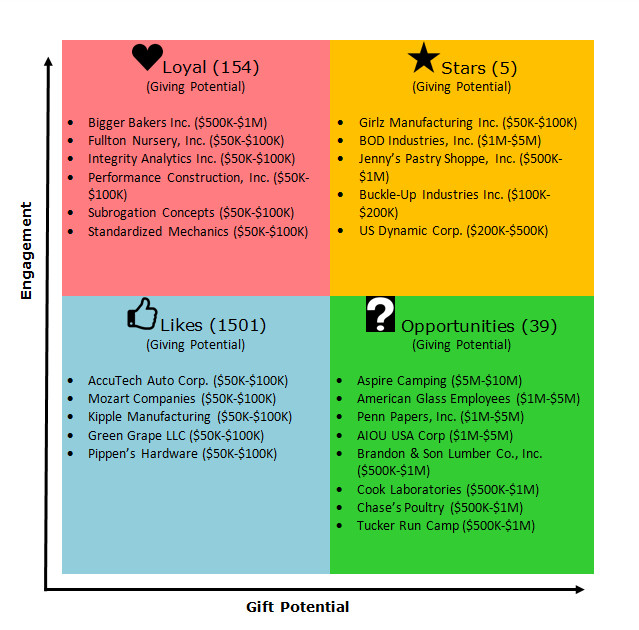

 Have you ever been in a conversation with someone that felt like an argument or debate, but it turned out you were both saying the same thing, just differently? I had one supervisor where this happened quite a bit before we realized what was happening. Many times the very skills that make great frontline fundraisers and great fundraising researchers translate into two very different languages!
 March is always an interesting month – International Women’s Day and now
  Do you dream of creating the perfect prospecting system? A system so flawless that the ratio of prospects to donors drops to 2:1 or even (gasp) 1:1? I do! And yet, barring advances in ESP, a 1:1 ratio feels quite out of reach. We simply don’t have access to people’s complex, internal motivations for giving until they get visited and share. Even so, we still have plenty of room to achieve better prospect-to-donor ratios.